9 min read
Hire a 3D modeler or use AI? Cost, time and limits
Hire a 3D modeler or use AI from a photo? What each one costs, what you hand over, how long it takes, the usual mistakes, and when each is the right call.
On this page
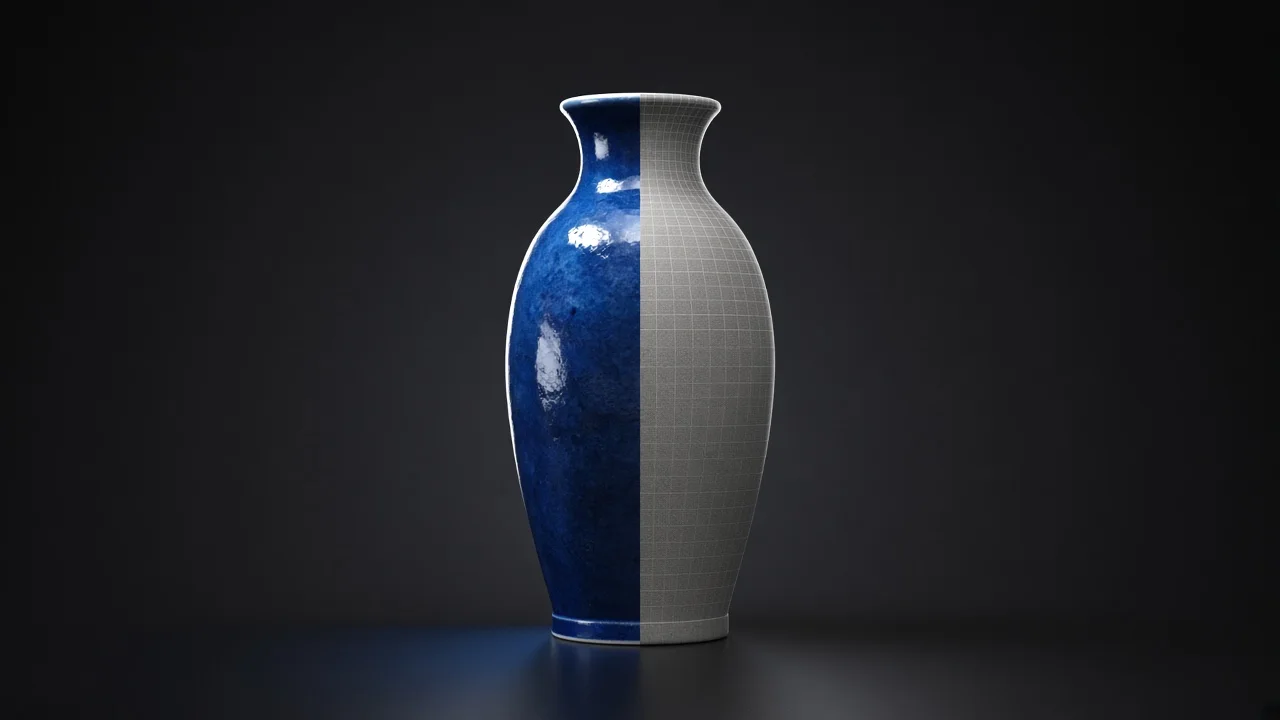
Hire a 3D modeler when the model must match CAD drawings, move, or run in a game engine. A freelancer or studio builds it by hand from your references, for a quoted price and agreed revisions. If the product exists and you have a good photo, AI from a photo gives you a model to check before you pay.
How does hiring a 3D modeler work?
You describe the piece, someone quotes, you approve drafts. The quality of the model depends mostly on the brief, so most of your work happens before anyone opens Blender.
- Write the brief: photos from every side, close-ups of each material, technical drawings or CAD files if they exist, the formats you need, and what the model is for (a product page, AR, an ad).
- Post it on a marketplace or send it to a studio. On Freelancer.com, posting is free and you compare bids, ratings and portfolios before you pick anyone.
- Shortlist two or three modelers whose portfolios include your category. A good lamp modeler is not always a good sofa modeler.
- Run a paid pilot of one or two pieces before you commit a catalogue.
- Review drafts against your photos, list every change in one message, and keep to the agreed number of rounds.
- Check the delivered file in your platform's own viewer, on a phone, before you sign off.
Studios package the same steps. Omi asks for photos from all angles or the product itself, includes two revision rounds per model, and says modeling takes at most two weeks from a complete order.
How does AI from a photo work?
There is no brief and no quote. You give the tool one photo and it predicts the sides the camera did not see.
- Pick one sharp photo of the whole piece, ideally from three-quarters on a plain background. How to turn a photo into a 3D model covers which shot works.
- Upload it. On easyrender you get a free angle sheet first: nine views, eight round the object and one from above.
- Check the back, the legs and the handles in that sheet. If something is off, try a different photo. Nothing has been spent.
- If it looks right, build the model for 64 credits ($0.64) and download the GLB and the USDZ.
- Add the GLB to your store with your platform's own tools. Shopify accepts GLB and USDZ as product media, up to 500 MB.
For a catalogue, you can upload in bulk from your library. If a build ever fails, the credits go back to your balance automatically.
What does each one cost per SKU?
Freelance prices are set piece by piece, so the honest answer is a range, and the ranges move. These are the published figures we could read, as of November 2026 unless dated otherwise.
| Route | What you provide | How you pay | A published price point | Revisions |
|---|---|---|---|---|
| Freelancer on a marketplace | Brief, photos, drawings if any | Hourly or fixed per piece, plus a platform fee | Profiles at $10 to $30 an hour on Freelancer.com's 3D modeling page; a 3% employer fee | Whatever you agree in the contract |
| Studio or modeling service | Photos or the product, references | Per model, quoted | Modelry (CGTrader) custom models from $60 each | Set by the studio; Omi includes two rounds |
| AI from a photo (easyrender) | One photo | Credits, only for a model you keep | $0.64 per model; the preview is free | Try another photo before you pay |
The Freelancer.com rates are the first profiles listed on its 3D modellers page on 11 November 2026, not a rate guide. Its fee page charges employers 3% or $3, whichever is greater, on fixed-price projects. Modelry's pricing FAQ says its from-$60 price includes consultation and quality checks.
For a sense of how complexity moves a quote, Sketchfab published estimates in October 2020 from its partner inVRsion: $40 to $200 for a simple model, $200 to $1,000 for a complex one. A designer sofa came in at $300 to $350 and about 16 hours. Those are 2020 prices, so treat them as proportions, not a quote.
Whatever the route, count the whole cost per SKU: the quote, the platform fee, and your own hours on the brief and the reviews. On easyrender, credits are $0.01 each from 500, or 5,500 a month on Pro for $49, and they never expire. The credits page lists every option.
How long does each one take?
With a freelancer, the clock starts at the brief, not at the order. Bids can come fast: Freelancer.com reports about 470 seconds to a first bid and 51 or more bids per project. Choosing among 51 portfolios is where your afternoon goes.
After that it is drafts and rounds. A studio that publishes a ceiling, like Omi's two weeks, gives you something to plan a launch around. A freelancer's turnaround is whatever you agree, so put it in writing.
With AI from a photo, almost all of the time is yours: choosing the photo and checking the preview. There is no brief to write and no round of messages to explain what the back looks like.
Which goals matter, and how do you measure them?
Decide what you are buying before you compare prices. Most stores care about four things, and each one can be logged without any special tool.
- Time from brief to approved file. Write down the date you send the brief and the date you sign off. Compare routes on the same three pieces.
- Revision rounds per model. Count them. Three rounds on every piece usually means the brief is missing something.
- Cost per SKU, all in. Quote plus fees plus your hours, divided by the models you actually kept.
- First-time acceptance. Does the file open in your platform's viewer and on a phone without going back to the modeler?
Then watch what shoppers do. Your store's own analytics show whether people turn the model and whether those product pages get more add-to-carts than similar pages without one. 3D for ecommerce sets out a simple before-and-after test.
When is hiring a 3D modeler the right call?
Some jobs need a person, because the model is built to a specification no photo contains.
- CAD-accurate models. Engineering parts, a product sold in three widths, anything a configurator has to rebuild from drawings.
- Animation. Opening drawers, a folding mechanism, an exploded view for an ad.
- Game-ready assets. Rigged models, levels of detail and engine-specific setup for Unity or Unreal.
- Products that do not exist yet. A prototype you want to show before the first unit is made has no photo to start from.
- Unreleased products under NDA. easyrender models appear in the public gallery by default, so a contract with a modeler suits a launch you cannot show yet.
- A single hero piece. If a whole campaign is built on one chair, paying for hand-tuned materials is a fair trade.
When is AI from a photo the right call?
When the product is real and on your site already, and what you need is a model shoppers can turn.
- Supplier stock you cannot touch. A catalogue photo of a rattan side chair is all you have, and a brief would be built on that same photo anyway.
- Many SKUs. Forty lamps from one supplier would mean forty quotes. Here they are forty previews, and you pay for the ones that look right.
- One-off pieces. A vintage sideboard sells once. A quoted model for one sale rarely pays back. Selling vintage furniture online covers the rest of that listing.
- Seeing it before you spend. The angle sheet shows the result before any money moves, which no brief can do.
If you have the photo in hand now, upload it and look at the free preview before you read further.
What would we do?
We would split the catalogue. Run every SKU through the free preview first, because it costs nothing and sorts the list quickly.
The pieces that look right become models straight away. The pieces that need exact engineering, animation or an engine go to a modeler, with a brief that now only covers the hard cases. The quote then covers only those pieces, and the modeler spends their time where a person adds the most.
What usually goes wrong, and how do you fix it?
Most problems on either route trace back to something left out at the start.
| Symptom | Cause | Fix |
|---|---|---|
| Quotes for the same chair are far apart | The brief left the use, formats and file budget open, so each modeler guessed | Send one spec sheet: use, formats, file budget, number of revisions |
| The file arrives as .max or .fbx and your store rejects it | Formats were never named | Ask for GLB and USDZ in the brief; Shopify takes both |
| The product page loads slowly on a phone | No file budget, so the model came out heavy | Set a triangle and texture budget up front; what a GLB file is explains how to check one |
| A third round of changes is billed as extra | Revisions were not defined in the contract | Agree the number of rounds and what counts as a change before work starts |
| The fabric colour is off | The modeler matched a warm-lit phone photo | Send colour-correct photos and close-ups of each material |
| You cannot change the model a year later | No source file or rights in the contract | Ask for the source file, such as the .blend, and the usage rights |
| A catalogue on hourly billing keeps creeping up | Repetitive SKUs paid by the hour | Pay a fixed price per piece after a one- or two-piece pilot |
| The photo is straight-on | The sides and the back are barely in frame | Use a three-quarter photo of the whole piece on a plain background |
FAQ
It depends on the piece and the person. As of November 2026, the first 3D modeling profiles on Freelancer.com listed $10 to $30 an hour, and Modelry lists custom models from $60 each. Complex furniture costs more. Add platform fees and your own time on the brief and reviews to get the real cost per SKU.
There is no standard turnaround, and the clock starts when your brief is complete. Omi, for example, publishes a ceiling of two weeks from a complete order, with two revision rounds included. Freelancers set their own turnaround, so agree a date and the number of rounds in writing before you pay a deposit.
For existing products you have a good photo of, AI from a photo covers what most product pages need: a model shoppers can turn, in GLB and USDZ. For CAD-accurate parts, animation, game-ready assets or products that do not exist yet, a modeler is still the right choice. You can use both on one catalogue.
Photos from every side, close-ups of each material and finish, technical drawings or CAD files if you have them, and what the model is for. Name the formats, a file budget and the number of revision rounds. Ask for the source file too, so you can make changes later without starting over.
For an online store, ask for GLB and USDZ. GLB works on the web and Android, and USDZ opens in AR Quick Look on iPhone and iPad. Shopify accepts both as product media. If the model is also for a game engine or a renderer, list those formats separately, because the setup differs.