10 min read
Sell vintage furniture online: platforms, photos, shipping
Sell vintage furniture online: where to list it, how to price it from sold listings, how to photograph flaws, what to write and how to ship it.
By Jorge Rodríguez
On this page
To sell vintage furniture online, pick a platform that fits the piece's value, price it from sold listings, photograph it in daylight from every side including its flaws, and write a listing with maker, era, material and measured size. Curated sites like Chairish suit designer pieces. Facebook Marketplace and eBay suit local and lower-priced sales.
Where can you sell vintage furniture online?
Match the platform to the piece. A signed mid-century lounge chair and a 1970s pine dresser have different buyers.
- Chairish: a marketplace for vintage and designer furniture, with a consignment service and a trade program for interior designers.
- 1stDibs: high-end design and antiques, from sellers its own experts vet.
- AptDeco: a used furniture marketplace that arranges pickup and delivery.
- Etsy: lists items at least 20 years old as vintage, and suits smaller pieces a courier can take.
- eBay: wide reach, plus a record of what buyers actually paid.
- Facebook Marketplace: local buyers, with pickup and payment agreed between you.
Three things decide the choice: what the piece is worth, who handles delivery, and whether buyers search for its maker. This is where we would list four typical pieces first.
| Piece | Where to list it first | Why |
|---|---|---|
| A signed mid-century lounge chair | Chairish or 1stDibs | Buyers there search by designer and expect to pay for provenance |
| A 1970s pine chest of drawers | Facebook Marketplace, collection only | Low value for its size, so a local buyer with a van beats any delivery quote |
| A pair of small brass table lamps | Etsy or eBay | They ship in a box, and both sites reach buyers far beyond your town |
| A large used sofa in a city | AptDeco | It arranges pickup and delivery, which is the hard part with a sofa |
Fees, seller approval and delivery rules differ between them and change over time. Read the seller terms before you list your first piece.
How do you price a vintage piece?
Price from what sold, never from what is listed. This is the method we would follow for every piece:
- Find the maker and the model, from a label, a stamp or the shape.
- On eBay, open Advanced Search, enter the maker and model, and tick Completed listings.
- Keep the sales that match your piece in model and condition, and ignore the ones that did not sell.
- Read a sale that went to a best offer as a ceiling, because the listing shows the asking price, not the accepted one.
- Adjust for condition: original handles and clean veneer push the price up, a replaced top or a repainted finish pulls it down.
- Take off the platform's fees and any delivery you are paying for, so you know what you take home.
Condition moves the price more than age. A teak sideboard with its original handles and clean veneer sells for more than the same model with a replaced top.
A maker's name changes the search itself. "Ercol" or "G-Plan" on a British piece brings buyers who search for that name, and they will not find a listing that says "vintage chair".
How do you find the maker and the age?
Look where makers put their marks: under drawers, beneath seats, on the back panel and under tabletops. Paper labels fade and fall off, so check for stamps pressed into the wood and for the outline of a label that is gone.
Construction adds clues, never proof. Hand-cut dovetails on a drawer are uneven, while machine-cut ones repeat exactly, and a back panel of solid boards usually points to an older piece than one of thin board. Write what you found, not what you hope.
If nothing is marked, say so. "Unmarked, in the style of mid-century Danish teak" is honest and still searchable, while a guessed maker invites a return and a bad review.
How do you photograph vintage furniture?
Shoot in daylight, against a plain wall, with the camera at the middle height of the piece. Take the full set: front, three-quarter, side, back, and the inside of every drawer and cupboard.
Then photograph every flaw close up: a water ring on the top, a chip in the veneer, a joint that moves. Vintage buyers expect wear. What they object to is wear they were not shown.
- 1Front
- 2Three-quarter
- 3Side
- 4Back
- 5Inside every drawer
- 6Maker’s label or stamp
- 7Joints and repairs
- 8Each flaw, close up
Shot 8 is the one that heads off a dispute after delivery.
Scratches show best in raking light. Turn the piece so the window light skims across the top at a low angle, and every scratch and ring casts its own small shadow. Point at the flaw with a pencil tip, so the buyer can find it on the piece.
Keep the photos in a fixed order and number them. The description can then say "chip on the back left leg, photo 7", which is the line that settles a dispute before it starts. The light and the setup are covered in product photography for ecommerce.
What should the listing say?
Lead with the words buyers type: maker, style, material and object. "Ercol elm Windsor dining chair, 1960s" finds more buyers than "Lovely old chair".
ErcolMakerelmMaterialWindsorStyledining chair,Object1960sEra
Lovely old chair
No maker, material, style or era: nothing a buyer searches for.
The description works best as a fixed order, the same for every piece:
- Maker, model and designer, and how you know: a label, a stamp, a receipt.
- Decade and country, or "unmarked" if you are not sure.
- Materials, as precisely as you can: solid elm and beech, or teak veneer on board.
- Width, depth and height measured with a tape, plus seat height for chairs and inside depth for shelves.
- Condition, flaw by flaw, each with its photo number.
- What is original and what was replaced, repaired or refinished.
- Collection or delivery, and the town the piece is in.
Describe condition plainly. "Light surface scratches on top, small chip on back left leg, see photo 7" reads as honest and heads off disputes.
How do you ship vintage furniture?
Decide before you list. Collection only keeps things simple but limits you to local buyers. Offering delivery widens the market and means getting a quote before the sale.
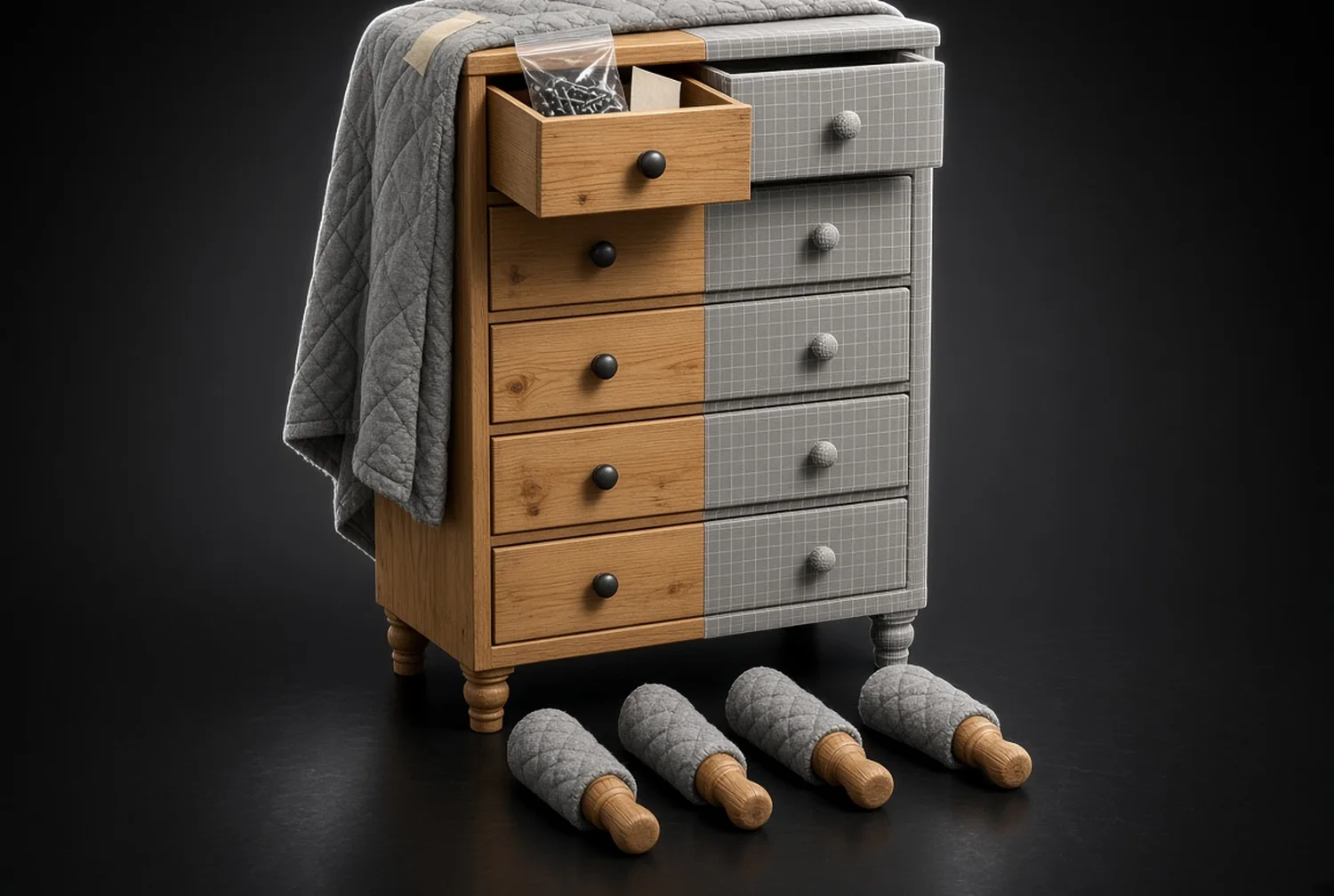
For a courier, prepare the piece in this order:
- Get the quote first, from the platform's delivery service or a courier, with the measured size of the piece.
- Take off legs, glass and loose handles where you can.
- Bag the screws, label the bag and tape it inside a drawer.
- Wrap the piece in moving blankets and tape the blankets, never the finish, because packing tape can lift old lacquer.
- Tape the drawers and doors shut through the blankets.
- Photograph it before you wrap it and again just before it leaves, in case of a damage claim.
How to sell antique furniture: what changes?
Age changes the buyer. An antique is usually more than 100 years old, which is also the line US customs uses, and its buyers care about provenance as much as condition.
Keep any receipt, auction record or family history and put it in the listing. For a valuable piece, get an appraisal before you price it, and favour dealers and curated sites like 1stDibs over general marketplaces.
The photos and the listing work the same way. Show the back, the joints and any repairs, because antique buyers judge age from construction as much as style.
Can a 3D model help sell a one-off piece?
A vintage piece has no catalogue shoot and no second unit. You photograph it once, and a buyer two hundred miles away has to judge it from those pictures.
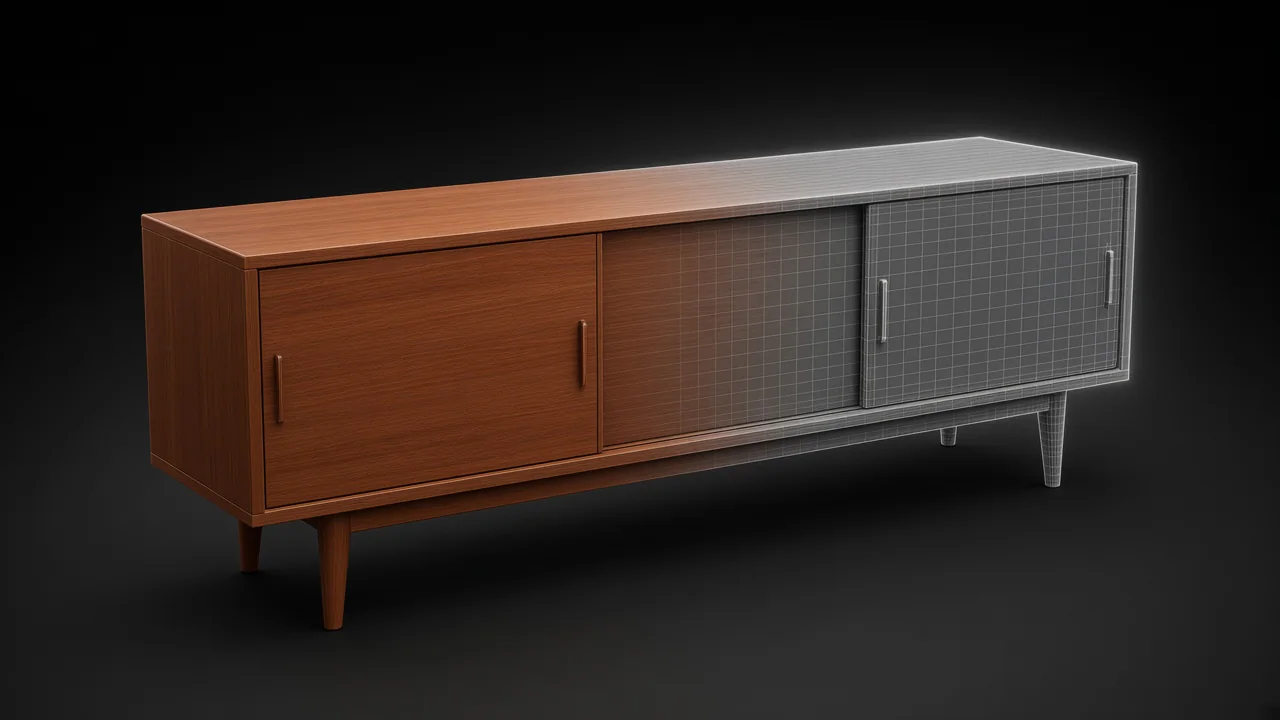
A 3D model made from one good photo lets that buyer turn the piece round on screen. We tried it on a solid wood bedside table, photographed once from the front.
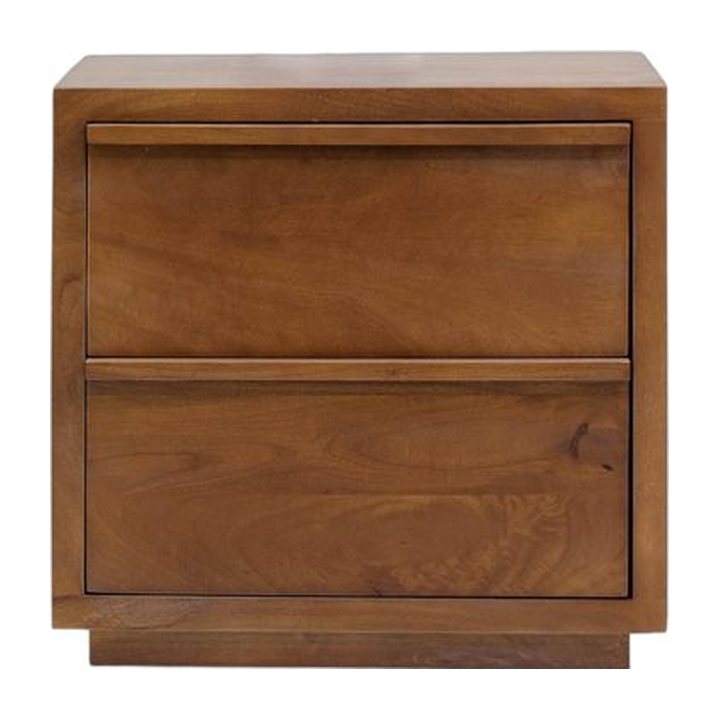
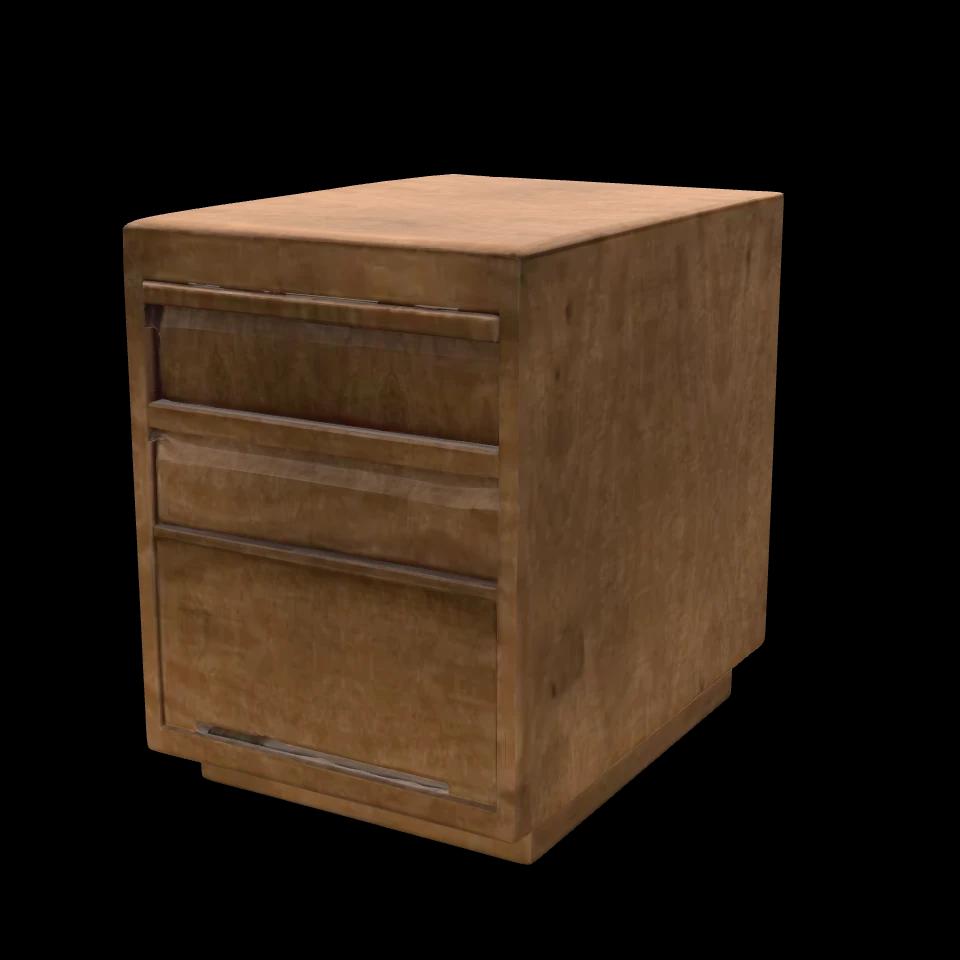
Each does a different job in the listing. The model answers questions about shape: how deep the top is, how the legs splay, what the sides look like. Condition is a job for photographs: wear, repairs, a knot in the grain or a replaced handle, each shot close up in daylight.
So use the model for shape and proportion, and the close-ups as the evidence of condition. For a vintage piece, the model sits next to the flaw close-ups, never in place of them.
Marketplaces set their own rules for 3D files, so in practice you send a link when someone asks for more angles, or add the GLB to your own Shopify store as product media. The routes to a model are in how to make a 3D model, and what a store does with one is in 3D for ecommerce.
Whether to hire a modeler or start from one photo is in hire a 3D modeler or use AI.
easyrender gives each finished model in its public gallery a page you can share by link. Put that link in your reply to a buyer, next to the close-ups and your tape measurements, which stay in the listing.
How do you know a listing is working?
Keep a simple log, one line per piece: platform, date listed, asking price, the sold listings you priced from, messages received, the question asked most, the price it sold for and the days it took. After ten pieces, it shows which platform and which kind of piece sell for you.
Read the messages as a to-do list. If three buyers ask whether the drawers run smoothly, the listing needs a photo of an open drawer and a line about it. A question you answer twice belongs in the description.
Watch the offers too. A run of offers far below your asking price usually means the price came from other asking prices rather than from sales, so go back to the sold listings.
What goes wrong, and how do you fix it?
Most failed listings fail in one of a few ways. This is the list we would check a quiet or troubled listing against.
| Symptom | Cause | Fix |
|---|---|---|
| No messages after two weeks | The title lacks the maker, material or object buyers search for | Rewrite it as maker, material, style, object and era |
| Only very low offers | The price came from asking prices, not sales | Price again from completed listings of the same model and condition |
| A buyer disputes the condition on arrival | A flaw that was never photographed | Photograph every flaw close up, and name each one with its photo number |
| Damage in transit | Legs left on, tape on the finish, or no blankets | Take the legs off, wrap in blankets, and photograph it before it leaves |
| Every message asks if the colour is real | Mixed light or a warm filter | Shoot again in daylight only, with the room lights off |
| A buyer cancels after measuring their room | No dimensions, or ones copied from a catalogue | Measure with a tape, including seat height and inside depth |
FAQ
It depends on the piece: designer and signed pieces do best on curated sites like Chairish or 1stDibs, where buyers expect to pay for provenance. Everyday vintage, like a pine chest of drawers, sells faster on Facebook Marketplace or eBay. Small items that ship by courier suit Etsy, while AptDeco arranges pickup for larger used pieces.
There is no single rule for vintage, but Etsy's threshold is a common reference: at least 20 years old. Antique usually means more than 100 years, the line the US tariff schedule uses for duty-free antiques under heading 9706. Give the decade in the listing rather than relying on either word.
Start from sold listings for the same maker and model, not from asking prices: on eBay, tick Completed listings in Advanced Search. Adjust for condition first, because original handles, clean veneer and no replaced parts move the price more than age does. Then take off the platform's fees to see what you keep.
No, a phone on a tripod, daylight from a window and a plain wall are enough. What matters is a complete set of angles and honest close-ups of every flaw. Buyers trust clear, plain photos of the real piece more than styled shots that hide the back and the wear.
Yes, always, measured by you with a tape: width, depth and height, plus seat height for chairs. Buyers check them against their space before they ask a question. Photos and 3D models do not carry reliable measurements, so the numbers in the text are what the buyer relies on when they decide.